CorpIn in Brussels: Why Europe Needs Measurable AI Maturity

Authored by
July 1, 2026
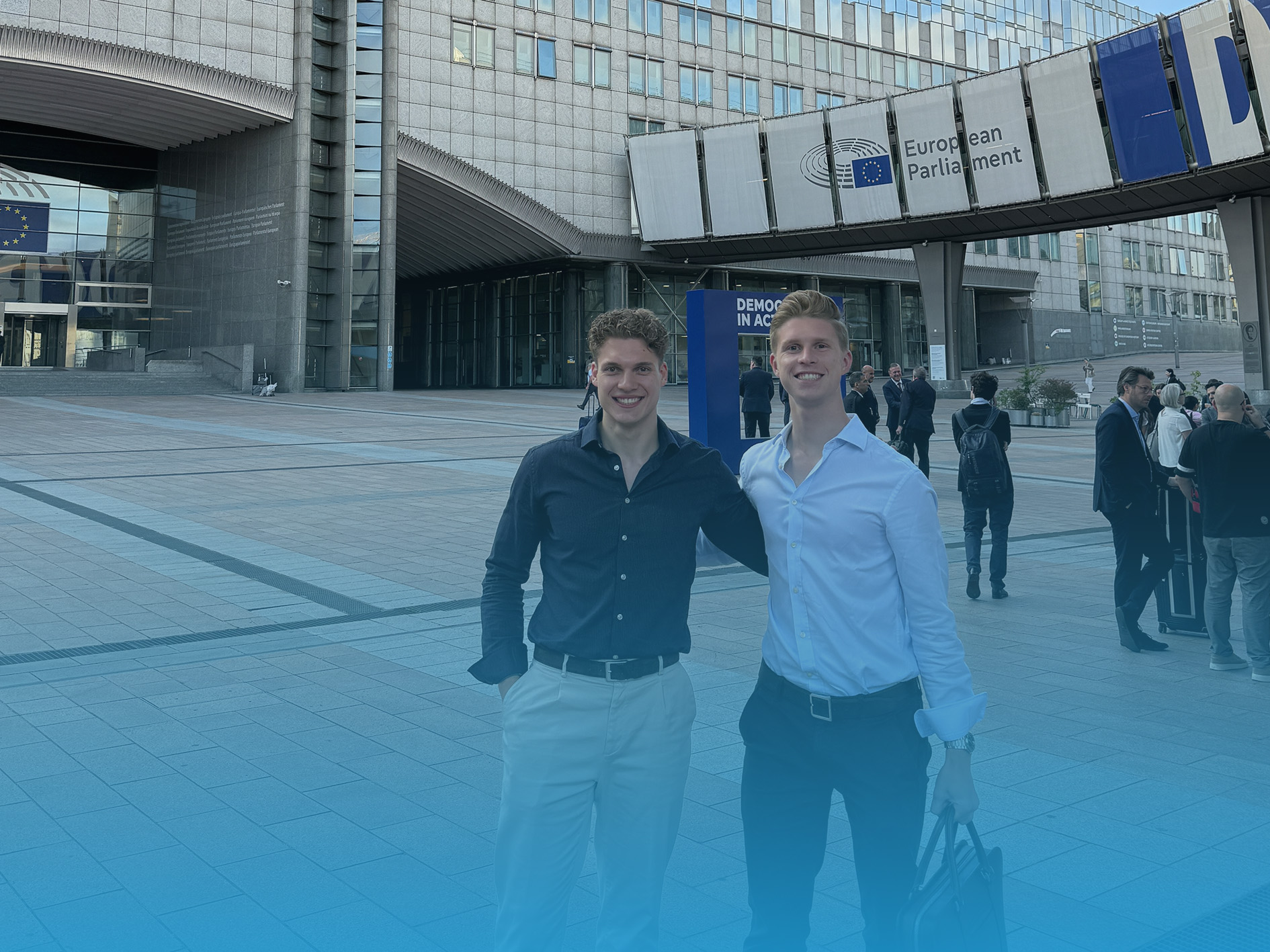
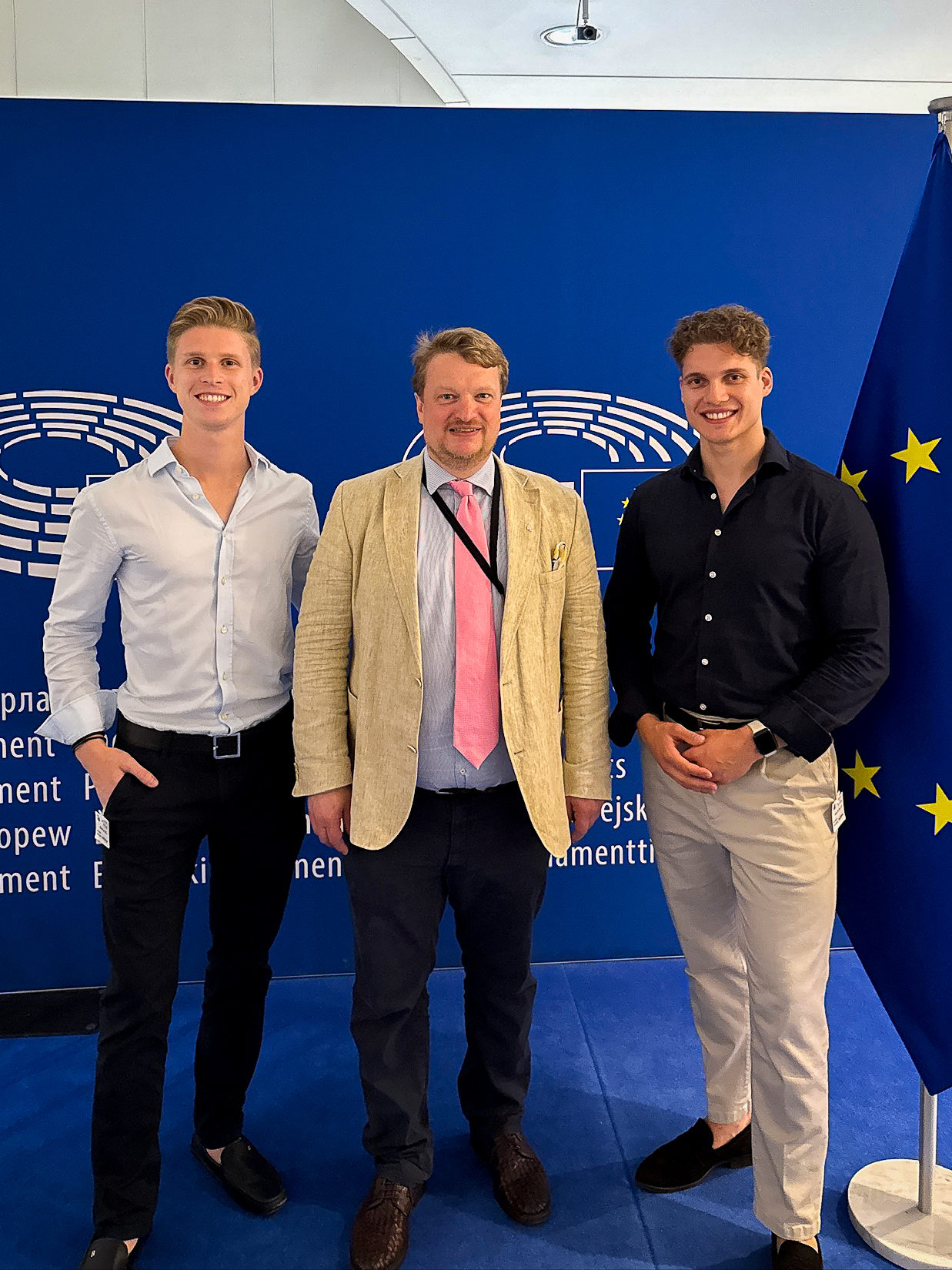
Two days in Brussels. Discussions with representatives of the European Parliament, the European Economic and Social Committee, various associations, business leaders, political representatives, and European institutions.
And one insight that came up in nearly every discussion:
Europe does not lack ambition. Europe often lacks direction, speed, and the ability to get things done.
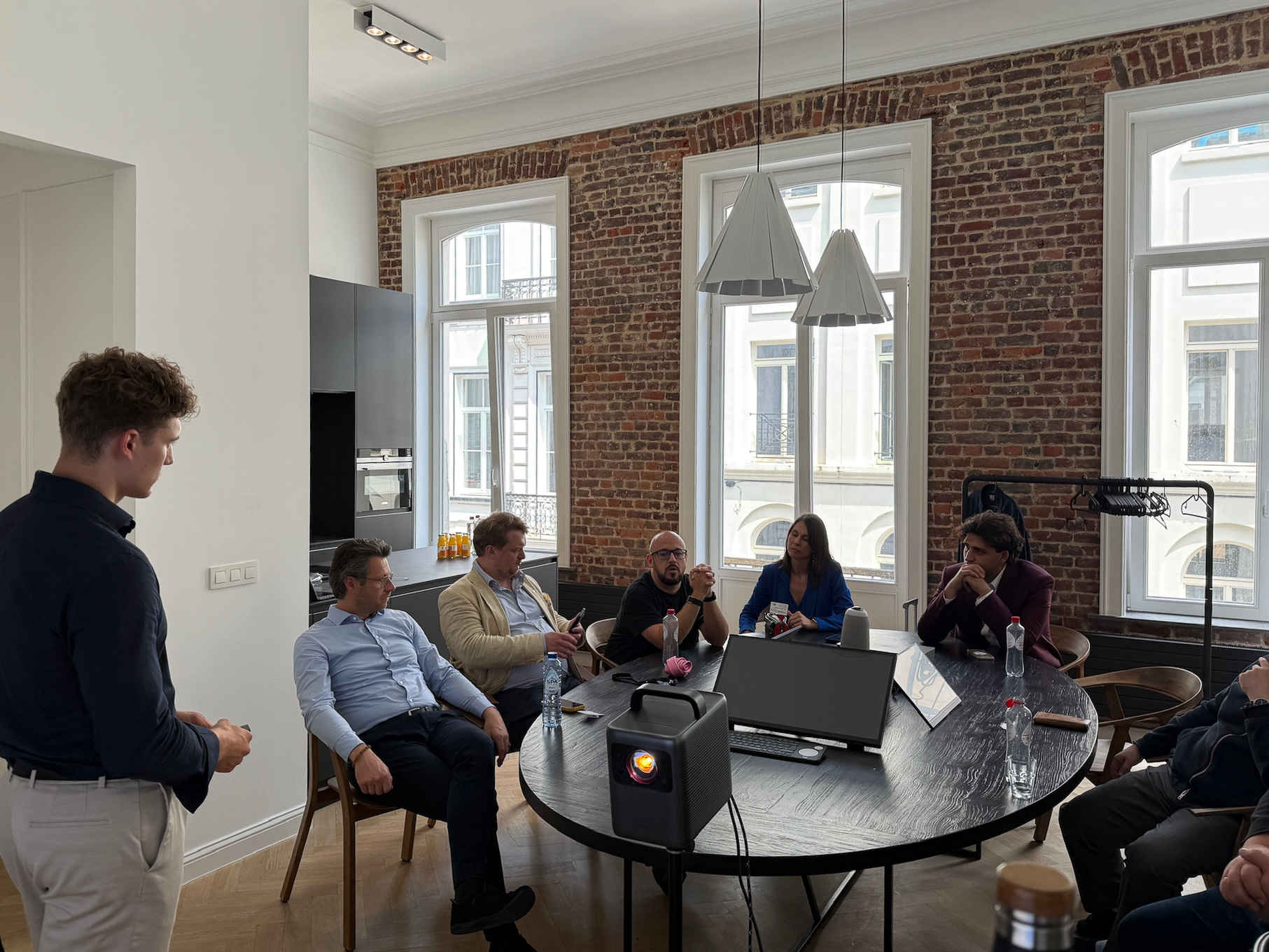
At the invitation of SME Connect, CorpIn was able to participate in the OPC Summit 2026 in Brussels and organize its own working session:
Helping European Organizations Develop AI Maturity: Benchmarking, Prioritization, and Continuous Improvement
For us, this session was much more than just a presentation. It was a strategic opportunity to discuss AI maturity right where Europe’s economic future is being shaped: in Brussels.
A Summit on Visibility, Competitiveness, and the Reality of Entrepreneurship
The OPC Summit 2026 was held under the following theme:
One-Person Companies and the Self-Employed in Europe: Working Together, Calling for Recognition
The focus was on one-person companies, the self-employed, small businesses, SMEs, associations, and those organizations that shape Europe’s economic reality on a daily basis.
The event brought together perspectives that are often considered separately in political discourse:
Business Practices.
European Regulation.
Digitalization.
Single Market.
Competitiveness.
Artificial Intelligence.
Topics discussed included the EU legislative process, stakeholder engagement, the Single Market, administrative burdens, the so-called “28th Regime”/“EU Inc.” debate, product regulation, market access, digital identity, browser consent, the Digital Omnibus, and the practical implementation of new regulatory requirements.
Among those in attendance were Dr. Horst Heitz, Mario Bartenhauser, Prof. Milena Angelova, Peter Dohr of the Austrian Chamber of Commerce, Jan-Frederik Kremer, Betsy Annen of Google, Leena Whittaker of EuroCommerce, Reinhold Lopatka, MEP, Angelika Winzig, MEP, Niels Flemming Hansen, MEP, as well as numerous representatives from associations, the business community, and the political sphere.
What made these two days special was that the discussions weren't abstract. They weren't about theory. They were about real companies, real administrative hurdles, real implementation challenges, and the question of how Europe can strengthen its economic foundation.
The central tension: Europe wants to move faster, but is becoming more complex
One theme ran like a common thread through the discussions: European companies want to grow, embrace digital transformation, and expand their international presence. At the same time, they are facing an increasingly complex regulatory landscape.
The discussions on the practical burdens faced by smaller companies were particularly striking. In a session on the reality of the single market, it was pointed out, among other things, that administrative hurdles within Europe can have the same economic impact as a massive non-tariff trade barrier. Estimates cited indicated that internal barriers in the EU single market can amount to the equivalent of about 44% for goods trade and as much as about 110% for services.
The figures on the administrative burden were equally striking: It was noted that, for Austrian companies, bureaucracy can account for a total of about 7.4% of staff capacity. For companies with up to 49 employees, an average of 77 working hours per employee per year was cited. For one-person companies, a figure of around 250 hours per year was discussed—that is, more than a full month of work spent solely on administration.
These figures are more than just statistics. They show why digitalization and AI cannot be viewed as merely “nice to have.” They are essential for ensuring that companies in Europe once again have more time to focus on what truly creates value: customers, innovation, productivity, and growth.
Why AI Maturity Is Becoming Crucial Now
Artificial intelligence is no longer just a topic for the future. It has already become an integral part of business processes: in marketing, customer communication, administration, HR, development, knowledge management, analytics, automation, and strategic decision support.
But this is exactly where a new problem arises.
Many companies are already using AI tools. Many are testing ChatGPT, Copilot, Claude, Gemini, or specialized automation solutions. Many are attending workshops, trying out use cases, or launching their first pilot projects.
But few people can answer this objectively:
Where do we actually stand?
How do we compare to similar companies?
What skills are we lacking?
Which use cases should we prioritize?
How do we measure progress over time?
That is the essence of what we at CorpIn describe as " strategic blindness."
Companies experiment, but they don't manage the process. They collect tools, but not decision-making logic. They talk about AI, but often without an objective basis for assessing its maturity.
Our conviction is therefore clear:
AI maturity is not just a technology problem. It is a measurement problem.
Our Presentation in Brussels: From AI Hype to Measurable Maturity
In our working session, we demonstrated why AI maturity is becoming a key competitive factor for European companies.
The foundation for this was laid at CorpIn as early as 2023. Drawing on academic work at Radboud University and at the University of St. Gallen, Nicolas Quell and Julianus Kath developed two perspectives on the same problem: one technological and one business-oriented.
Even back then, a pattern was emerging: Most academic and practical discussions about AI adoption focused on large companies. Large budgets. Large data departments. Large-scale transformation programs.
But the reality of the European economy is quite different. It consists largely of SMEs, family-owned businesses, specialized service providers, association members, self-employed individuals, and smaller organizations, many of which do not have their own data, strategy, legal, or AI departments.
That is precisely what gave rise to the question that continues to drive CorpIn to this day:
If AI is supposed to transform Europe's competitiveness, why is so much of the discussion focused on organizations that already have the resources to deal with it?
This question became the starting point for our research, our benchmark, and our platform.
Today, CorpIn is based on an empirical benchmark of over 1,400 organizations and a structured framework that makes AI maturity measurable, comparable, and manageable across multiple dimensions.
EU AI Act: AI Moves from Experiment to Governance Issue
Another key part of our discussion in Brussels was the EU AI Act.
The AI Act is fundamentally changing the role of AI in businesses. AI is no longer treated solely as an innovation issue, but increasingly as a matter of governance, transparency, and risk.
For companies, this means that in the future, it will no longer be enough to simply use individual AI tools. Organizations must understand that:
What AI systems do we use?
In which processes are they used?
What risks do they pose?
What roles do we play—provider, user, operator, integrator?
What transparency obligations apply to us?
How do we ensure AI literacy?
How do we document and manage AI use over time?
Of particular relevance here is the requirement for AI literacy. Companies must ensure that individuals who use or oversee AI systems have an adequate understanding of the opportunities, risks, and limitations of these systems.
This makes it clear: The AI Act is not just a legal issue. It is an organizational and maturity issue.
For CorpIn, this confirms one of our core theses:
AI adoption without governance will not scale. Governance without measurability remains abstract.
This is exactly where our platform comes in.
Why CorpIn Is Relevant in the European Context
Brussels has made it very clear to us: Europe doesn't just need more AI tools. Europe needs better decision-making logic for AI.
The EU is discussing the "AI Continent," technological sovereignty, "AI Factories," "Digital Decade Targets," and competitiveness. At the same time, companies are facing very specific questions in practice:
Which technologies are relevant?
Which processes are truly suitable?
Which regulatory requirements must be taken into account?
What data set is sufficient?
Which employees need to be trained?
Which investments generate real impact?
CorpIn answers these questions not based on gut feelings, but through structured analysis, benchmarking, and prioritization.
Our platform measures AI maturity:
Measurable —through standardized scoring logic,
Comparable —across company sizes, industries, and cohorts,
Actionable —through prioritized recommendations and progress logic.
CorpIn thus positions itself not as just another AI tool, but as a corporate intelligence layer: a control layer that helps companies understand their AI landscape, prioritize areas for action, and build maturity over time.
Associations as the Key to Scaling Up in Europe
One particularly interesting insight from Brussels was the role of the associations.
Associations have something that technology providers rarely have: trust, access, and context. They understand their members. They know their challenges, communication channels, and realities. They can translate complex European issues into concrete support services.
This role can be particularly crucial when it comes to AI.
After all, many companies don't need an enterprise transformation right away. They need a structured starting point:
Where do we stand?
What are we missing?
What should we improve first?
How do we compare?
What are the next logical steps?
This opens up a new opportunity for associations: They can not only provide their members with general information, but also offer concrete, benchmark-based guidance.
This is more than just a member benefit.
This marks the beginning of a European benchmark infrastructure for AI maturity.
What We're Taking Away from Brussels
The two days in Brussels have strengthened our resolve in our mission.
Europe is at a turning point. The regulatory landscape is becoming more complex. Technological development is accelerating. Competitive pressure from the U.S. and China is increasing. At the same time, European companies have enormous strengths: industrial depth, regional roots, a strong educational system, trustworthy institutions, and a diverse business landscape.
The key question is whether these strengths can be translated into concrete AI maturity quickly enough.
Our response to this is a structured decision-making framework that helps companies better understand themselves, benchmark their performance, and make targeted improvements.
Designed in Switzerland. Built for Europe.
It was a special moment for us to discuss in Brussels a topic that began for CorpIn in Switzerland.
What began in 2023 with research, bachelor's theses, and initial projects is now evolving into a platform with European significance.
We are convinced that:
Europe’s AI future will not be defined by regulation or technology alone. It will be defined by our ability to make AI maturity measurable, comparable, and actionable for every organization.
That's exactly what CorpIn is working on.
Designed in Switzerland.
Built for Europe.
Defining Corporate Intelligence.
Thanks
Special thanks go to SME Connect, Dr. Horst Heitz, Mario Bartenhauser, and all the participants, speakers, and organizations that made these two days possible.
Brussels has shown that the discussion about Europe’s AI future is not abstract. It is happening right now. And it needs companies, associations, and institutions that are willing to translate guidance into measurable progress.
CorpIn is ready to do its part.
The content of this article may have been improved with the help of artificial intelligence. Therefore, we cannot guarantee that all information is complete and error-free.